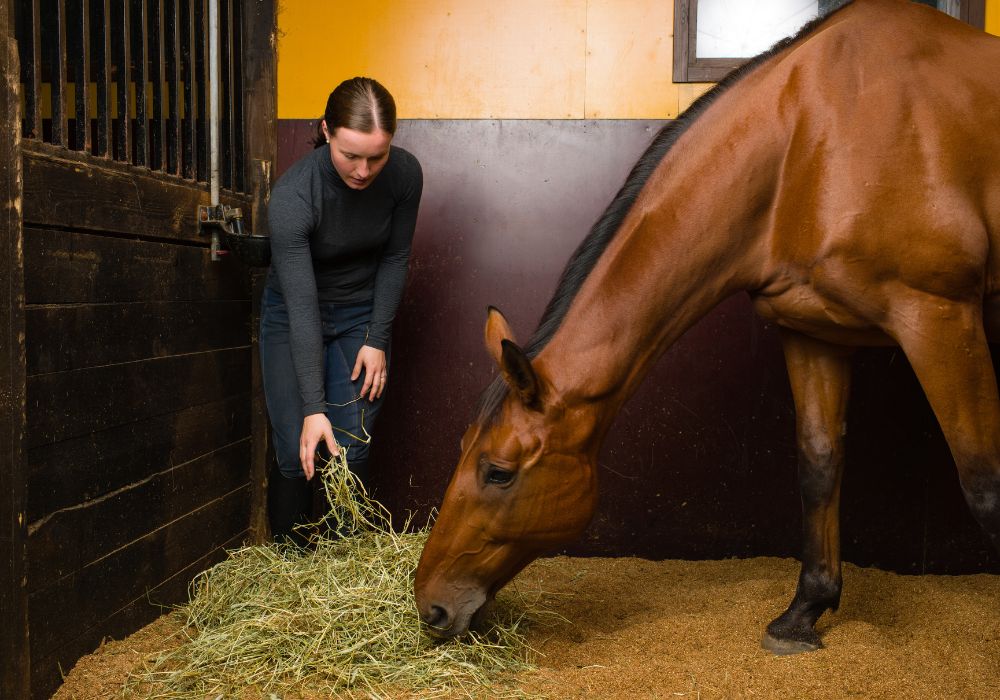

Feeding your horse might seem straightforward—hay, grain, and water—but the truth is, proper nutrition is key to keeping your horse healthy, happy, and performing at its best. Whether you’re a casual rider, a competitive equestrian, or a horse owner managing a barn, understanding your horse’s dietary needs can make a huge difference in their well-being.
Horses are designed to graze. Their digestive systems are built for constant intake of fiber-rich forage, like grass or hay. A good rule of thumb is that a horse should eat 1.5–2% of its body weight in forage daily. For example, a 1,000-pound horse should consume roughly 15–20 pounds of hay per day.
Forage provides essential nutrients, supports healthy digestion, and keeps horses mentally satisfied by mimicking their natural grazing behavior.
Grains, pellets, and concentrates are supplemental—they should support, not replace, forage. Overfeeding grains can lead to digestive issues, obesity, and metabolic problems like laminitis.
Horses require constant access to clean water. On average, a horse drinks 5–15 gallons a day, depending on size, workload, and weather conditions. Proper hydration supports digestion, circulation, and overall health.
Horses have small stomachs and are designed to eat frequently in small amounts. Large, infrequent meals can cause colic, digestive upset, or boredom-induced cribbing. Consider splitting daily grain or concentrate feeds into 2–3 smaller meals throughout the day.
Every horse is unique. Regularly assess body condition, watch for weight gain or loss, and adjust feeding amounts accordingly. A balanced diet combined with proper exercise is the best way to maintain optimal health.
If you’re unsure about your horse’s nutritional needs, don’t guess. A qualified equine nutritionist or veterinarian can help design a feeding program that meets your horse’s specific age, activity level, and health requirements.
Healthy feeding = happy, thriving horses. Proper nutrition supports everything from performance and energy levels to immunity and longevity. By prioritizing forage, supplementing wisely, and feeding responsibly, you can ensure your horse stays in peak condition year-round.
Learn about our equine insurance options to protect your horse, barn, and equipment.